Finding a fitness class should be about more than choosing an activity. The right class should also feel welcoming, practical, and comfortable for your needs. Whether you are new to exercise, returning after a break, living with a disability, or simply looking for a flexible routine, accessible classes can make movement easier to enjoy.
Accessible fitness does not mean there is only one way to participate. A class may offer seated and standing options, adjustable intensity, clear instructions, affordable pricing, or a welcoming environment for people with different experience levels. Classes are available online, at community centers, in parks, and at local studios.
What Makes a Fitness Class Accessible?
Accessibility can mean different things to different people. Before choosing a class, consider the features that would help you participate comfortably and consistently.
Look for:
– Clear information about class length, intensity, and required equipment
– Options to exercise while seated, standing, or using support
– Instructors who demonstrate more than one movement variation
– Captions, transcripts, or visual demonstrations for online classes
– Easy-to-follow verbal instructions
– Step-free entrances and accessible restrooms at in-person locations
– Flexible pricing, free trial sessions, or community discounts
– Small class sizes or quieter environments, if preferred
– The ability to pause, take breaks, or modify movements
– A respectful atmosphere where participants are not pressured to keep up
If a class description does not answer your questions, contact the instructor or venue before signing up. Asking about accessibility is a normal part of finding a good fit.
Accessible Online Fitness Classes
Online classes can be a convenient choice if transportation, scheduling, or unfamiliar spaces make in-person programs difficult. You can often exercise from home using a computer, tablet, or phone. Many classes are available live, while others are recorded for use at a convenient time.
Seated Fitness Classes
Seated classes are designed to be performed from a chair or another stable surface. They may include gentle cardio, strength movements, stretching, or mobility exercises.
These classes can be useful for people who prefer to remain seated for all or part of a session. Some instructors also demonstrate standing alternatives, allowing participants to choose the version that works best for them.
When searching online, try terms such as:
– Seated exercise class
– Chair fitness
– Seated strength workout
– Chair yoga
– Seated dance
Choose a sturdy chair without wheels and make sure there is enough space around it for safe movement.
Low Impact Cardio
Low impact cardio classes focus on steady movement without requiring jumping. Examples include walking workouts, rhythmic movement, light dance, and step-touch routines.
These classes can be adjusted in several ways. You may reduce the range of motion, slow the pace, keep one foot on the floor, or take regular breaks. Look for instructors who explain modifications rather than presenting one fixed version of every exercise.
Low impact cardio can be a good option for beginners who want an upbeat class without a high-impact format.
Chair Yoga and Gentle Stretching
Online chair yoga and gentle stretching classes often combine breathing, posture, balance practice, and controlled movements. Participants may complete the entire class seated or use a chair for support during standing exercises.
Search for classes that explain how to set up your space and offer alternatives for movements that do not feel comfortable. A calm pace and clear demonstrations can make these sessions easier to follow.
Adaptive Strength Training
Strength classes do not have to involve heavy weights or complicated equipment. Online programs may use resistance bands, light hand weights, or everyday household items.
Adaptive strength classes may demonstrate different positions, including seated, standing, or floor-free options. They may also focus on one area at a time, such as upper-body or lower-body movements.
If you are using equipment at home, start with light resistance and follow the instructor’s guidance. Stop or change an exercise if it causes sharp pain, dizziness, or discomfort that does not feel normal for you.
Accessible Fitness Options in Your Community
Local classes can provide social connection as well as a regular time for movement. Community programs are often offered through recreation centers, libraries, parks departments, senior centers, schools, and nonprofit organizations.
Community Center Classes
Community centers may offer beginner fitness, stretching, dance, walking groups, water exercise, or strength classes. Some facilities have accessible entrances, changing areas, and equipment.
Ask about:
– Entrance and parking access
– Class size and room layout
– Available seating
– Instructor experience with modifications
– Equipment requirements
– Registration fees and reduced-cost programs
– Whether a support person may attend
A short conversation with staff can help you decide whether the setting is a good match before attending.
Accessible Walking Groups
Walking groups can be a simple way to move with others. Some groups meet indoors at shopping centers or recreation facilities, while others use parks, tracks, or neighborhood paths.
Before joining, check the route and pace. Ask whether the group takes breaks, uses paved paths, or offers shorter route options. A group that welcomes different speeds is more likely to provide a comfortable experience.
You can also create a small walking group with friends, neighbors, or coworkers. Choose a route with seating, shade, and accessible restrooms when possible.
Adaptive Dance and Movement Classes
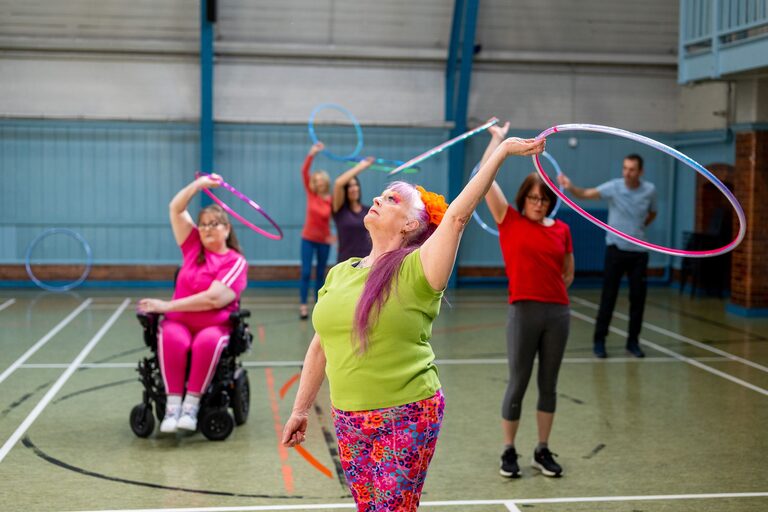
Dance classes can include seated dance, line dancing, creative movement, and other formats that allow participants to move at their own pace. Some instructors teach a movement with several variations, while others invite participants to interpret the music in their own way.
These classes can be enjoyable for people who prefer music and social interaction. Ask whether the class requires quick turns, floor work, or frequent changes in direction so you know what to expect.
Water-Based Classes
Some recreation centers offer water walking, gentle aquatic exercise, or beginner water fitness. Pools may provide ramps, lifts, handrails, and accessible changing facilities.
Contact the facility to confirm which features are available and whether an instructor can provide modifications. You may also want to ask about water temperature, class size, and whether swimming skills are required.
How to Choose the Right Class
Start with your practical needs rather than the most popular class. A simple program that fits your schedule and comfort level is often easier to maintain than an ambitious option that creates barriers.
Use this checklist:
- **Set a realistic goal.** You may want more energy, a regular routine, social connection, or a chance to try something new.
- **Choose a suitable format.** Decide whether online, in-person, live, or recorded classes work best.
- **Check the instructor’s approach.** Look for clear explanations, respectful language, and multiple movement options.
- **Review the space or technology.** Confirm that your home setup or local facility meets your needs.
- **Try a beginner session.** A short or introductory class can help you understand the pace.
- **Notice how you feel.** The class should be challenging in a manageable way, not overwhelming.
- **Adjust without guilt.** Taking a break or choosing an easier variation is part of participating.
Making Fitness More Sustainable
Consistency often depends on convenience. Keep a chair, resistance band, or other simple equipment where it is easy to reach. Add class times to your calendar and choose sessions that fit naturally into your day.
You can also combine different formats. For example, try an online stretching class during the week and join a local walking group on the weekend. Variety can keep your routine interesting while allowing you to choose the option that best suits your energy and schedule.
Most importantly, look for environments where you feel respected. Accessible fitness is not about meeting someone else’s standard. It is about finding enjoyable ways to move, connect, and build a routine that works for you.