
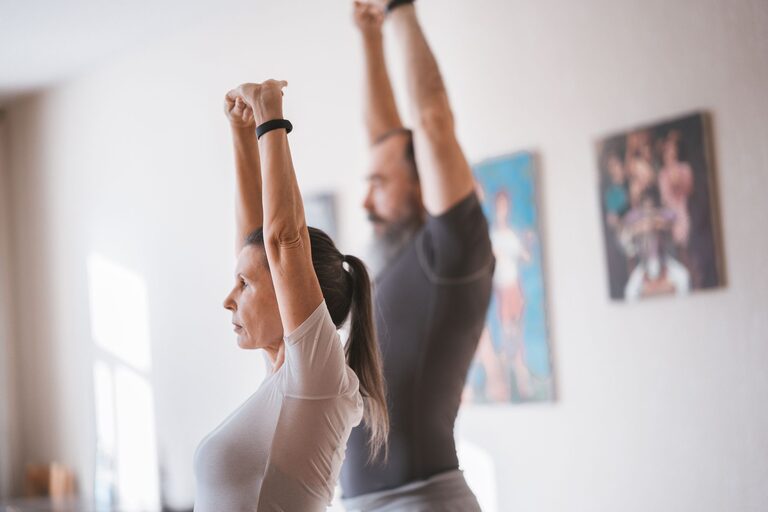
Feeling stiff after sitting, waking up, or finishing a busy day is common. A few simple stretching habits can help you move more comfortably and stay aware of how your body feels. The goal is not to force your range of motion or complete a demanding routine. Instead, focus on gentle, consistent movement that fits naturally into your day.
Stretching works best when it is comfortable and regular. Even a few minutes at a time can make movement feel easier, especially when paired with everyday activities such as getting out of bed, taking a work break, or winding down in the evening.
Start With Gentle Movement
Before holding a stretch, spend a few moments moving easily. This can help you transition from stillness into activity.
Try one or two of these simple warm-up movements:
– Walk around the room for two minutes.
– Roll your shoulders forward and backward.
– Slowly bend and straighten your elbows.
– March gently in place.
– Circle your ankles while seated.
– Turn your head from side to side without forcing the motion.
These movements should feel smooth and relaxed. The purpose is to reduce the contrast between being still and stretching, not to create fatigue.
Use Short Stretching Breaks
Long periods in one position can make the body feel tight. Instead of waiting until the end of the day, add brief movement breaks throughout your schedule.
A useful habit is to stretch for two to five minutes every hour or two. Set a quiet reminder on your phone or connect the break to an existing routine, such as:
– After finishing a meeting
– Before making a cup of tea or coffee
– When switching tasks
– After using the bathroom
– Before lunch
– At the end of the workday
During each break, stand up, walk a little, and choose one or two gentle stretches. Small breaks are easier to maintain than an ambitious routine that feels difficult to repeat.
Focus on Commonly Stiff Areas
Daily activities often involve sitting, standing, driving, lifting, or looking down at a screen. Simple stretches can bring attention to areas that may feel restricted after these activities.
Neck and Shoulders
Sit or stand tall with your shoulders relaxed. Slowly tilt your right ear toward your right shoulder, then return to the center. Repeat on the left side. You can also gently turn your head to look over one shoulder and then the other.
For the shoulders, lift them toward your ears, hold briefly, and let them drop. Follow with slow shoulder circles.
Keep the movements small and controlled. Avoid pulling on your head or moving quickly.
Chest and Upper Back
If you spend much of the day at a desk, your upper body may benefit from a change in position. Stand near a doorway and place your forearms lightly on the frame, if comfortable. Take a small step forward until you notice a mild stretch across the front of your chest.
For the upper back, place your hands together in front of you and gently reach forward while allowing your upper back to round slightly. Breathe normally and avoid collapsing through your lower back.
Hips and Legs
A seated figure-four stretch can be done in a chair. Sit with both feet on the floor, place one ankle over the opposite thigh, and keep your back comfortably upright. Lean forward slightly only if you feel a gentle stretch around the hip.
For the backs of the legs, stand facing a chair or wall for support. Place one heel slightly forward with the toes pointing upward, then bend the supporting knee a little. Keep your back relaxed and hinge forward only as far as comfortable.
A simple calf stretch can be done by placing your hands on a wall, stepping one foot behind you, and keeping the back heel down. Bend the front knee gently while maintaining a comfortable position.
Hold Stretches Comfortably
A stretch should feel mild to moderate, not sharp, burning, or painful. Hold a comfortable position for about 15 to 30 seconds while breathing normally. There is no need to bounce or push deeper with each breath.
Use these guidelines:
– Relax your shoulders and jaw.
– Keep your movements slow.
– Breathe steadily.
– Stay within a comfortable range.
– Stop if you feel pain, numbness, tingling, dizziness, or unusual discomfort.
– Move out of the stretch gradually.
Flexibility can vary from one side of the body to the other. That is normal. Try to give each side similar attention without forcing the less flexible side to match the other.
Pair Stretching With Daily Activities
The easiest routine is one you do not have to remember separately. Attach a stretch to something that already happens every day.
For example:
– Stretch your calves after brushing your teeth.
– Roll your shoulders after sitting down at your desk.
– Move your neck gently after a long screen session.
– Stretch your hips after removing your work shoes.
– Take a short walk before preparing dinner.
– Do relaxed leg stretches while waiting for water to boil.
You can also keep a written list of three favorite stretches in a visible place. A note near your desk, bedside table, or television can serve as a simple reminder.
Try a Short Morning Routine
A morning routine can help you begin the day with relaxed, easy movement. Keep it simple and avoid rushing.
Try this sequence:
- Take several comfortable breaths while standing or sitting.
- Reach both arms overhead, if that feels comfortable.
- Lower your arms and roll your shoulders slowly.
- Turn your upper body gently from side to side.
- Move through a few easy knee bends.
- Walk around for one or two minutes.
This routine does not need to be intense. Its purpose is to wake up your movement gradually and help you notice any areas that feel stiff.
Add an Evening Wind-Down
Gentle stretching can also become part of an evening routine. Choose quiet, comfortable movements that help you shift away from a busy day.
You might stretch your calves, hips, chest, and shoulders while listening to calm music or taking slow breaths. Keep the room comfortable and use a chair, wall, or cushion for support as needed.
Avoid treating evening stretching as a test of flexibility. A relaxed routine is more useful than trying to reach a specific position.
Build Consistency Over Intensity
Stretching habits are most effective when they are realistic. You do not need a long session every day. Five minutes performed regularly may be easier to maintain than a demanding routine completed only occasionally.
Start with one daily habit, such as a short break after lunch. Once it feels automatic, add another stretch or movement break. Keep track of your routine with a calendar, checklist, or phone reminder if that helps.
Pay attention to how you feel during and after movement. If a stretch repeatedly causes pain or unusual symptoms, stop doing it and consider asking a qualified health professional for personalized guidance. With a gentle approach and regular practice, simple stretching can become an easy part of comfortable daily movement.