
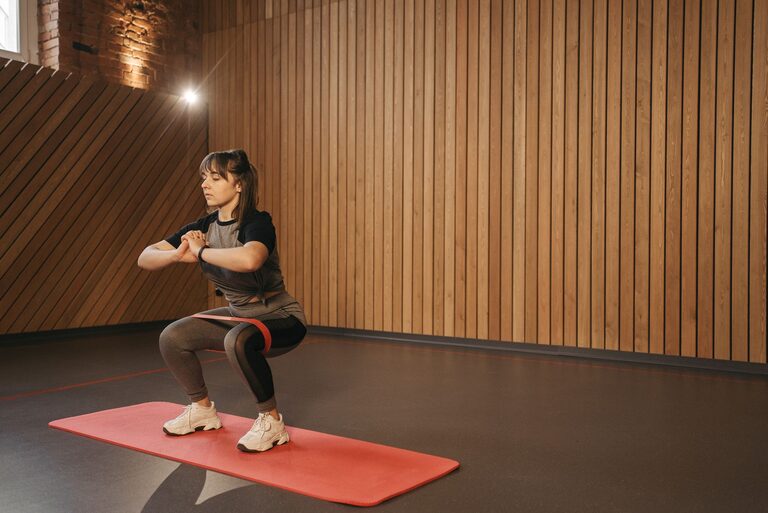
Strength training does not require a gym, expensive equipment, or complicated routines. With a little space and a few minutes, you can work major muscle groups at home using your body weight and everyday movements.
For beginners, the goal is to build consistency, learn good form, and gradually make exercises more challenging. The following exercises are simple, flexible, and suitable for many home workout spaces.
Getting Started Safely
Before exercising, clear a stable area and wear comfortable clothing and supportive shoes if needed. Begin with a five-minute warm-up to prepare your body. Try marching in place, gently swinging your arms, walking around the room, or doing slow bodyweight movements.
Focus on controlled motions rather than speed. You should feel your muscles working, but stop if you experience sharp pain, dizziness, or unusual discomfort. If you have an injury or a health concern, consider asking a qualified professional which activities are appropriate for you.
A beginner-friendly workout can include:
– Five minutes of warm-up
– Five to seven strength exercises
– One or two sets of each exercise
– Eight to 12 repetitions per set
– A short cool-down
Rest for about 30 to 90 seconds between sets, depending on how you feel.
1. Chair Squats
Chair squats strengthen the legs and hips while providing a helpful target for beginners. Use a sturdy chair that does not slide.
How to do them
- Stand in front of the chair with your feet about hip-width apart.
- Extend your arms forward or keep them at your sides.
- Bend your knees and slowly lower your hips toward the chair.
- Lightly touch the chair with your hips, but try not to sit fully.
- Press through your feet to return to standing.
Keep your chest lifted and your knees generally aligned with your toes. Start with eight to 12 repetitions. As you become more comfortable, lower yourself more slowly or pause briefly near the chair.
2. Wall Push-Ups
Wall push-ups work the chest, shoulders, and arms. They are a gentle alternative to floor push-ups and make it easy to adjust the difficulty.
How to do them
- Stand about one arm’s length from a clear wall.
- Place your palms on the wall at chest height.
- Keep your body in a straight line from your head to your heels.
- Bend your elbows and bring your chest toward the wall.
- Press through your hands to return to the starting position.
Keep your elbows angled slightly downward instead of pointing directly out to the sides. To increase the challenge, move your feet farther from the wall. You can also progress to push-ups against a sturdy table or countertop.
3. Glute Bridges
Glute bridges target the muscles in the hips and the back of the legs. They can be performed on a carpet, exercise mat, or another comfortable surface.
How to do them
- Lie on your back with your knees bent.
- Place your feet flat on the floor, about hip-width apart.
- Rest your arms by your sides.
- Tighten your stomach gently and press through your feet.
- Lift your hips until your body forms a comfortable diagonal line.
- Pause briefly, then lower your hips with control.
Avoid pushing your hips higher than is comfortable or arching your lower back. Begin with 10 repetitions. To add variety, pause at the top for two or three seconds.
4. Supported Reverse Lunges
Reverse lunges strengthen the legs and hips while also challenging balance. Holding a wall or the back of a sturdy chair can make the movement easier.
How to do them
- Stand tall with your feet together and one hand lightly touching support.
- Step one foot backward.
- Bend both knees slightly as you lower your hips.
- Keep most of your weight on the front foot.
- Press through the front foot to return to standing.
- Repeat on the other side.
Your front knee should stay comfortable and generally point in the same direction as your toes. Start with five to eight repetitions per side. If a full lunge feels difficult, take a smaller step and lower only a short distance.
5. Standing Calf Raises
Calf raises are simple to perform and can help strengthen the lower legs and ankles. Use a wall or chair for balance.
How to do them
- Stand with your feet hip-width apart.
- Hold the support lightly.
- Slowly lift your heels until you are standing on the balls of your feet.
- Pause at the top.
- Lower your heels slowly to the floor.
Keep your ankles steady and avoid bouncing. Try 10 to 15 repetitions. To make the exercise more challenging, use a slower pace or perform it one leg at a time while holding support.
6. Bird Dogs
Bird dogs train the muscles that help support your core, back, and hips. The movement also encourages balance and coordination.
How to do them
- Start on your hands and knees with your hands under your shoulders.
- Keep your back in a comfortable, neutral position.
- Slowly extend one arm and the opposite leg.
- Hold for a moment while keeping your hips level.
- Return to the starting position.
- Repeat on the opposite side.
If extending an arm and leg together feels challenging, begin by lifting one arm or one leg at a time. Perform five to eight repetitions per side with slow, controlled movements.
7. Standing Rows With a Towel
A towel row can help you practice the pulling motion used to strengthen the upper back. This exercise is best done gently and without forcing the towel.
How to do them
- Hold a towel with both hands in front of your body.
- Stand tall with your feet comfortably apart.
- Pull your hands away from each other to create light tension.
- Draw your elbows back while keeping your shoulders relaxed.
- Pause, then slowly release the tension.
Keep the movement controlled and avoid jerking the towel. Complete 10 to 12 repetitions. You can also practice the motion without a towel by squeezing your shoulder blades gently together.
Creating a Simple Home Routine
Choose four or five exercises and complete them as a circuit. For example:
– Chair squats: 10 repetitions
– Wall push-ups: 10 repetitions
– Glute bridges: 10 repetitions
– Supported reverse lunges: six per side
– Bird dogs: six per side
Rest after completing the list, then repeat it once if you feel comfortable. A full session may take 15 to 25 minutes. Start with two days per week, leaving time between sessions for rest. As the routine becomes easier, add a few repetitions, complete another set, or use a slower pace.
Tips for Staying Consistent
The best routine is one you can follow regularly. Schedule workouts at a convenient time and keep your equipment, such as a mat or chair, ready to use. You can also divide the exercises into smaller sessions during the day.
Track your progress by noting the exercises, repetitions, and how challenging they feel. Celebrate small improvements, such as better balance, smoother movement, or completing an extra repetition.
Strength training works well alongside other forms of activity. Add walking, gentle stretching, dancing, or active household tasks to create a balanced approach to staying active at home. Start slowly, focus on quality movement, and build your routine one session at a time.